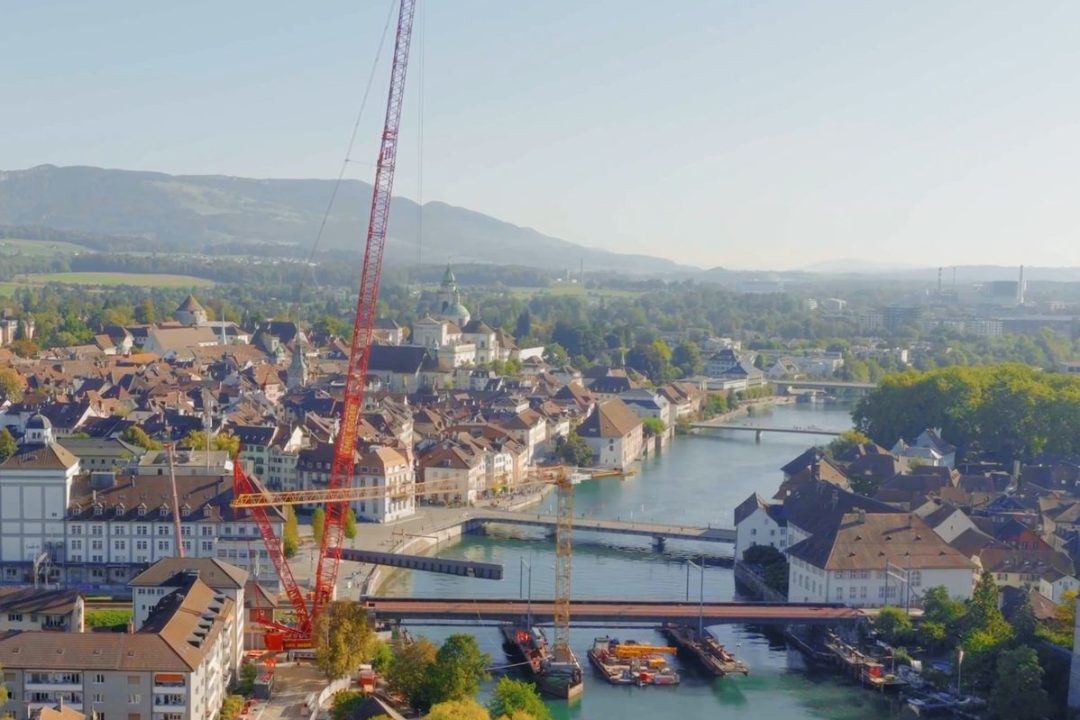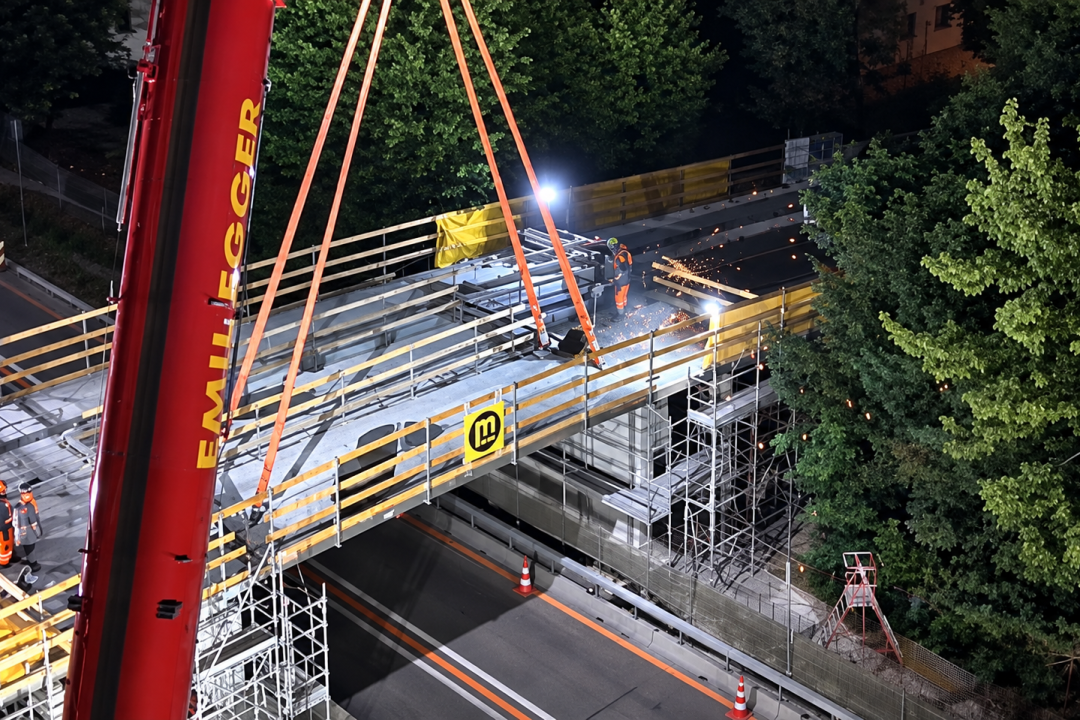



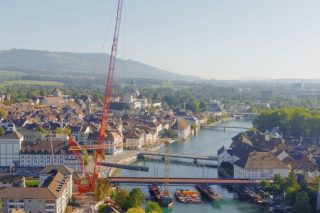

The project was characterized by complex heavy-duty logistics, short time frames and precise coordination – with minimal disruption to traffic on the national road.
Two-part execution – two bridges, two stages
Stage 1
In a night-time operation, a 200-ton auxiliary bridge was removed in an elevated position.
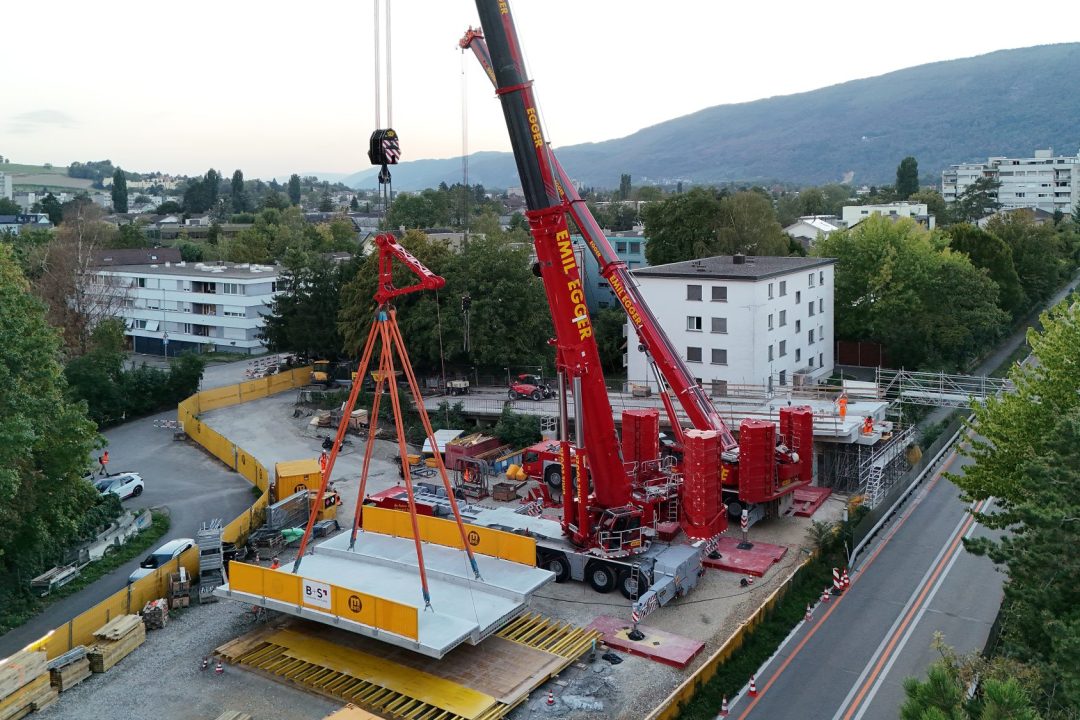
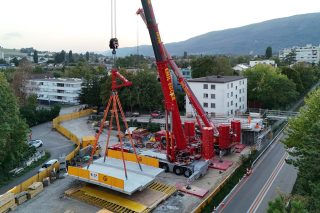
Two self-propelled transport vehicles, each with 12 axle lines (SPMT Self-Propelled Modular Transporter), were used for this. The bridge was then lowered to the ground using a 350-tonne and a 300-tonne pneumatic crane and later dismantled using a 100-tonne crane.
Stage 2 (four months later)
The new UHPC bridge (ultra-high-performance concrete), weighing around 400 tons, was constructed on a falsework in an elevated position. It was then moved by 2 x 12 axle lines next to the highway, where it was moved precisely to its final position during the night. The lift to the final position was carried out using a 4-point jack-up system (hydraulic lifting system), in which each unit can carry a load of up to 250 tons.
Equipment & engineering
State-of-the-art heavy-duty equipment was used to carry out this work:
- 4 x 6-axis line sets SPMT with 2 power packs
- 4 jack-up units with a lifting capacity of 250 tons each
- Tire cranes with lifting capacities of 300-350 tons
- Auxiliary cranes up to 100 tons
- Heavy-duty towers (up to 150 t per tower)
- Load distribution plates to protect the substrate
- Engineering & project coordination by EMIL EGGER
Special features
- Extremely short closure times: The main work took place when the highway was fully closed – with time windows of less than 4 hours for the core processes.
- Precise process planning: Every work step had to be meticulously planned and coordinated – from the positioning of the lifting systems to the coordination of the cranes and SPMT.
- Suitable for working underneath pipes: The system is particularly well proven in a narrow construction area under existing pipes.